Cultivo
Simiente de remolacha azucarera
Beta vulgaris subsp.vulgaris var.altissima · Producto · EPPO BEAVA · Código 0220040300000000
Sobre Simiente de remolacha azucarera
Simiente de remolacha azucarera corresponde en el registro del MAPA a Beta vulgaris subsp. vulgaris var. altissima, código EPPO BEAVA. La denominación identifica la semilla destinada al cultivo azucarero y debe distinguirse de otros usos de Beta vulgaris. Antes de preparar la siembra conviene confirmar la identidad varietal, el lote y la densidad prevista, porque las condiciones autorizadas se expresan por kilogramo de semilla y por hectárea.
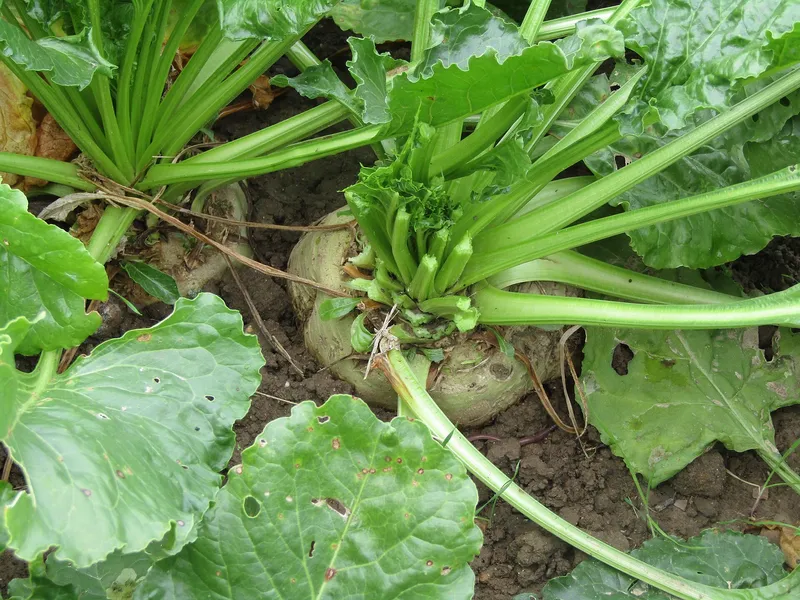
La fotografía representa plantas de remolacha azucarera en campo con raíces visibles. Es una referencia del cultivo, no una prueba del estado sanitario de una parcela ni una guía para diagnosticar daños foliares. La decisión sobre el tratamiento de semillas requiere partir del organismo objetivo documentado, del producto concreto y de sus condiciones de empleo, sin inferir eficacia a partir de la imagen.
En la autorización vigente de SUSTEED, registro ES-02061, la simiente de remolacha azucarera figura para tratamiento directo en interior, en BBCH 00, frente a Rhizoctonia solani y Phoma spp. La dosis indicada es 6,6 ml por kilogramo de semilla y se permite una sola aplicación. El máximo documentado es cuatro kilogramos de semilla por hectárea y 26,4 ml de producto por hectárea.
La siembra posterior puede hacerse en invernadero o al aire libre, excepto cuando la semilla se haya tratado frente a Rhizoctonia solani: en ese caso, la siembra se limita a invernadero permanente o no permanente. El plazo de seguridad no procede. Durante mezcla, carga, tratamiento y siembra deben aplicarse las protecciones indicadas para el operario y el trabajador, además de mantener cinco metros sin sembrar junto a masas de agua superficial cuando se utilice semilla tratada.
Antes del tratamiento deben comprobarse el nombre comercial, el número de registro, el lote, la dosis y el destino de la siembra. No corresponde extrapolar estas condiciones a remolacha de mesa, otros productos o usos no mencionados. El Registro Oficial de Productos Fitosanitarios del MAPA y la etiqueta del envase son la referencia para confirmar la vigencia y cualquier modificación técnica.
Plagas
en Simiente de remolacha azucarera
Productos
para Simiente de remolacha azucarera
Formulados
para Simiente de remolacha azucarera
Bacillus amyloliquefaciens (cepa QST 713) 88.59% p/p (esporas + residuos de fermentación y agua), min. 3.0 x 10¹³ CFU/L [FS] P/P
FS - Suspensión concentrada para tratamiento de semillas · 1 producto autorizado
BACILLUS FIRMUS (cepa I-1582) 1,7 x 10E10 cfu/ml [FS] P/V
FS - Suspensión concentrada para tratamiento de semillas · 1 producto retirado

Comentarios
Los comentarios se cargan al llegar a esta sección.